
Results
-
 £30.00
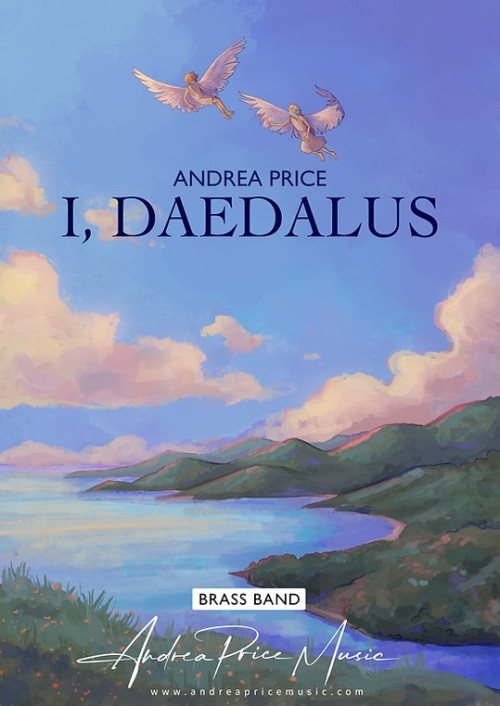
I, Daedalus (Brass Band - Score only) - Price, Andrea
This title is now digital download only - November 2025 Daedalus (pronounced day-da-luss) is a prominent figure in Greek mythology, renowned for his exceptional skills as an inventor, craftsman, and architect. The story of Daedalus symbolises human ingenuity, and epitomises the complex relationship between human creativity and its consequences. His myths explore themes of innovation, pride, and the perilous balance between human ambition and natural limits. After designing the labyrinth for King Minos, Daedalus and his son, Icarus, were imprisoned in a tower in Crete. Daedalus fashioned wings from feathers and wax, and father and son set out on their ill-fated escape. The music is through-composed, with a short introduction leading to five main sections:I - Inventor in the TowerII - Father and SonIII - Flight and FallIV - LamentV - Seeker of KnowledgeDuration: c. 10 minutes
Estimated dispatch 7-14 working days
-
 £69.99
That's the Way I Like 'Em (Brass Band - Score and Parts)
For many years Peter Kleine Schaars' jazz quartet provided sparkle and energy for various festivities and other occasions. If required the ensemble could alternate jazz repertoire with pop and latin music too. Their wide experience taught the musicians that an hour of unbeatable repertoire is the perfect end to every swinging party. Based on this practical knowledge Kleine Schaars has chosen his favourite pop pieces and arranged them in this animated medley entitled That's the Way (I like Them). 08:45
Estimated dispatch 7-14 working days
-
 £43.00
Fantasia on Themes by Purcell (Brass Band - Score and Parts) - Shepherd, Ian
Fantasia consists of three distinct sections that use thematic material from three separate pieces by Henry Purcell. The first section is based on the march from Funeral Music for Queen Mary which is dramatically dark and powerful but also uplifting. The Second section uses the devastatingly beautiful aria Dido's Lament or When I am laid in earth from the opera Dido and Aeneas as its basis and builds to enormous proportions, unlike the original aria. The third section begins with a haunting reference to the Rondo from Abdelazer. Gradually, this builds towards an exciting re-statement of the theme in the first section to the finale. Duration: 8.30
Estimated dispatch 7-14 working days
-
 £38.00
Moose on the Loose (Brass Band - Score and Parts) - Hamlyn, Mark
"I had a dream of a moose that escapes captivity and heads towards the city. At first he has a ball with all the new things to see but as he approaches the centre he gradually despairs at the chaos of the crowds of people and traffic. In the end he flees desperately out of the city and slams himself back into his cage. The piece is clearly a homage to Shostakovich and perhaps shouldn't be taken too seriously" - Mark Hamlyn. Duration: 4.00. Suitable for 1st Section Bands and above.
Estimated dispatch 7-14 working days
-
 £29.95
I Know Thou Art Mine (Brass Band - Score and Parts) - Ballantine, Leonard
A simple hymn setting on the SA tune, Unsworth.
Estimated dispatch 7-14 working days
-
£14.95
I Know Thou Art Mine (Brass Band - Score only) - Ballantine, Leonard
A simple hymn setting on the SA tune, Unsworth.
Estimated dispatch 7-14 working days
-
£29.95
Just As I Am (Brass Band - Score and Parts) - Heaton, Wilfred
A typically dramatic 'classic' by Heaton. Published in 1947 but written many years before, this timeless composition is more than 'just a hymn setting' - more a miniature Tone Poem of real Heaton intensity. Immensely popular for both SA and 'contesting' bands and featured on no less than 6 recordings in this catalogue.
Estimated dispatch 7-14 working days
-
£14.95
Just As I Am (Brass Band - Score only) - Heaton, Wilfred
A typically dramatic 'classic' by Heaton. Published in 1947 but written many years before, this timeless composition is more than 'just a hymn setting' - more a miniature Tone Poem of real Heaton intensity. Immensely popular for both SA and 'contesting' bands and featured on no less than 6 recordings in this catalogue.
Estimated dispatch 7-14 working days
-
 £37.95
GIRL I LEFT BEHIND ME, The (Brass Band) - Sparke, Philip
Recorded on Polyphonic QPRL229D Ovation!
Estimated dispatch 7-14 working days
-
£37.95
I GOT RHYTHM (Brass Band) - Gershwin, George - Fernie, Alan
Recorded on Polyphonic QPRL084D Light as Air
Estimated dispatch 7-14 working days